
In high-speed manufacturing, moving individual items is a baseline requirement. Maintaining the structural integrity of a stack is a different problem entirely. For industries producing paper plates, greeting cards, bank checks, and wet wipes, the stack is the unit of measure for quality, and moving loose or wrapped piles without them sliding, collapsing, or shingling is a constant operational headache. Shuttleworth has built specialized handling solutions that keep stacks perfectly aligned from the press to the package.
What Is “Shingling” and Why Does It Derail Production?
Shingling occurs when the friction of a standard conveyor belt or traditional rollers causes the bottom of a stack to move at a different rate than the top. The result is a slumped, staggered pile that resembles overlapping roof shingles — and it causes problems downstream in two predictable ways.
At Xpedx, loose paper bank check stacks needed to be re-oriented from short-edge leading to long-edge leading while staying perfectly squared for an automatic shrink wrapper. A shingled stack frequently fails to enter the wrapper intake cleanly, leading to jams and product damage.
At American Greetings, the system meters 1,100 cards per minute and transfers stacks between conveyors without toppling. Their de-stacker relies on a clean, vertical stack to strip the bottom card one at a time — any shingling causes the machine to pull multiple cards or none at all, halting production entirely.
How Shuttleworth Keeps Stacks Squared Under Pressure
Shuttleworth’s approach centers on low back pressure accumulation — surface technologies that respond to the weight and movement of the product rather than fighting against it. When a stack reaches a stop, rollers stop spinning beneath it, eliminating the friction that causes stacks to shift or spread.
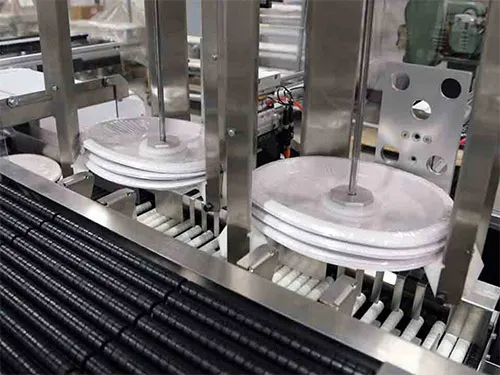
For Hoffmaster, this meant going beyond transport altogether: custom lift grids vertically build stacks to the exact height required for manual case packing, turning the conveyor into an active assembly step.
Stack Handling Across Different Products and Geometries
| Customer | Product | Challenge | Solution |
| Tufco | Unwrapped wet wipe stacks | Lane changes at 500 products/min | Servo-controlled paddles |
| Deco | Paper plates from multiple presses | Scuffing bottom plate during combining | Rollers that stop under the product |
| Caraustar | Cardboard stacks | Damage during transfer to inline trimmer | Tube rollers for seamless transitions |
| Hoffmaster | Paper plate stacks | Building to case-pack height | Custom in-surface lift grids |
The Technologies Behind Stack Stability
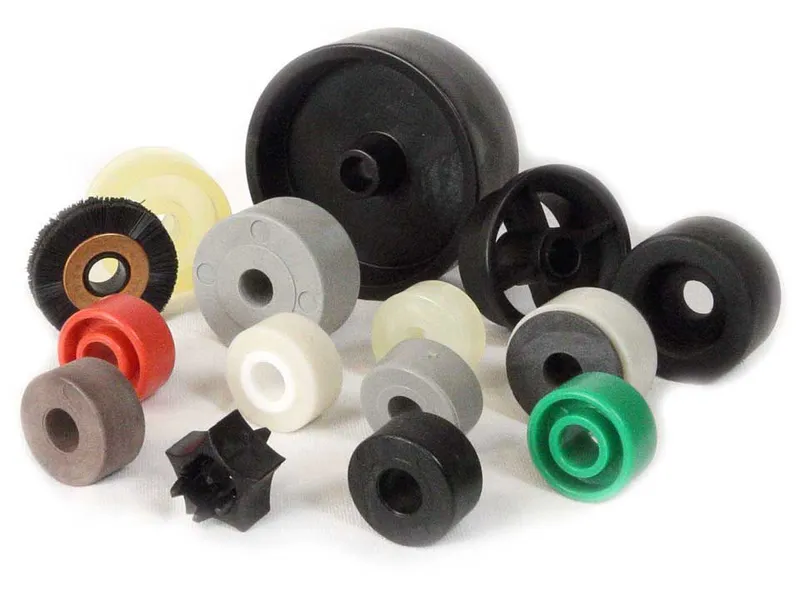
Star Rollers: Developed specifically for the Xpedx and American Greetings applications, this surface minimizes shingling in loose paper stacks by reducing the scrubbing action on the bottom sheet. It’s one of the more targeted pieces of engineering in Shuttleworth’s portfolio.
Slip-Torque® Design: The foundation of most Shuttleworth solutions. Rollers stop spinning when a stack reaches a stop, eliminating the friction that causes stacks to slide apart during accumulation.
Conductive & Spaced Rollers: Used in dusty environments like paper plate presses to dissipate static buildup and allow debris to fall through the conveyor surface rather than accumulating beneath the stack.
In-Surface Lift and Transfer Grids: Move stacks vertically or laterally between conveyors while maintaining alignment through the transition — no manual re-squaring required.