
Commercial baking presents a genuinely tricky set of conveyor challenges. Fragile products like breadsticks, frozen pizza crusts, and waffles need to move quickly through a production line, but speed and sensitivity don’t naturally coexist on traditional systems. Shuttleworth builds conveyor handling solutions specifically designed to handle this tension, helping bakery manufacturers reduce product damage, meet food-grade sanitation requirements, and keep throughput high.
Why Do Bakery Products Get Damaged on Conveyor Lines?
Most product damage happens during accumulation which is the moment when products queue up and wait. Conventional conveyors keep pushing even when products are stopped, creating back pressure that crushes breadsticks, scuffs carton surfaces, and generates waste before packaging even begins.
Beyond physical damage, bakery environments have strict hygiene demands. Conveyors need to survive heavy wash-down procedures without mechanical degradation, something standard systems often aren’t designed for.
What Are the Most Common Pain Points for Bakery Conveyor Systems?
Three issues come up repeatedly across the industry:
Orientation errors — Breadsticks and similar products often arrive in random orientations, requiring manual correction that slows lines and introduces inconsistency.
Waste at the wrapper — Misaligned or improperly weighted products tend to fail at the wrapping and cartoning stages, creating avoidable downstream waste.
Sanitation gaps — Conveyors that can’t be thoroughly cleaned, or that aren’t built from food-grade materials, create real compliance and safety risks.
How Shuttleworth Approaches It
Rather than treating the conveyor as passive transport, Shuttleworth integrates it into the decision-making layer of the production line. In one deployment with United Bakeries, the system automatically re-orients trays, verifies weight, and diverts approved products into a tray wrapper — all without manual intervention.
Which Bakery Products Has Shuttleworth Built Solutions For?
| Product | Challenge | Shuttleworth Solution |
| Frozen pizza crusts | Multi-lane combining at high speed | Easy Clean 1000 conveyors + lift grids, 100+ products/min |
| Graham crackers & waffles | Precise slug counts for cartoning | Servo SmartFeed indexing technology |
| Breadstick trays | Random orientation entering the line | Pneumatic stops + bump turns for exact positioning |
What Is Slip-Torque® Technology and Why Does It Matter for Bakeries?
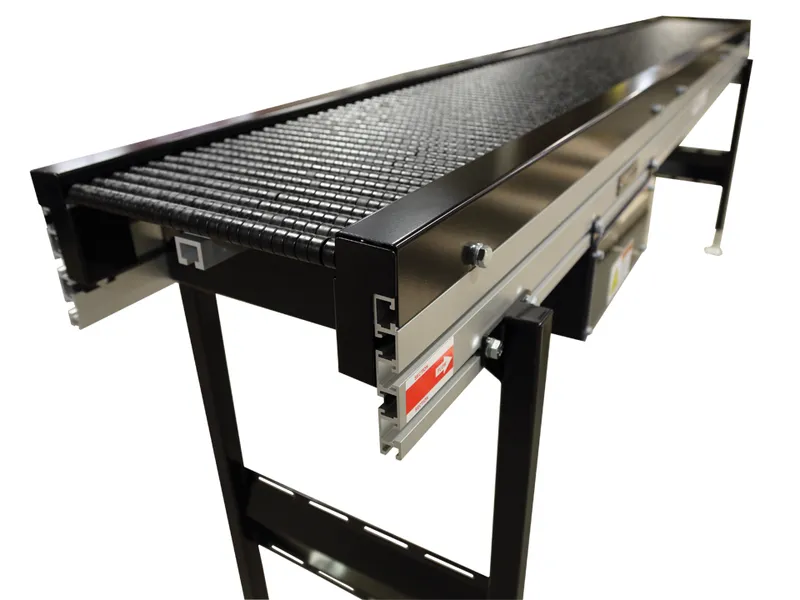
Slip-Torque® is the core technology behind most Shuttleworth bakery solutions. The design allows rollers to stop spinning beneath a product when it encounters a stop — eliminating the friction and back pressure that cause damage during accumulation. For fragile bakery products, this is the difference between a pristine breadstick and a broken one.
Shuttleworth Technology and Systems for Bakery Applications
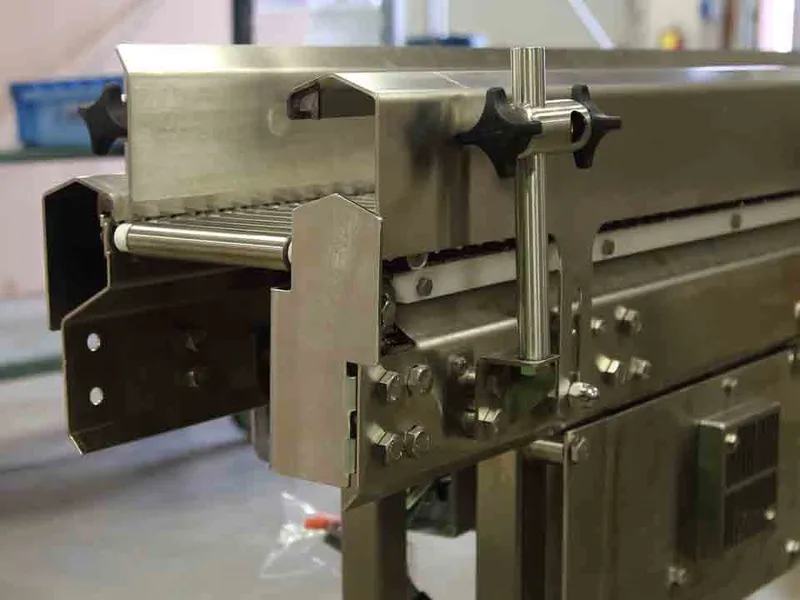
Easy Clean 1000: A stainless steel frame system built specifically for heavy wash-down environments, meeting food-grade safety requirements.
Lift and transfer grids: Enable direction changes without disrupting product orientation, keeping items properly aligned through transitions.
Pneumatic diverters: Sort underweight products and balance lanes to prevent bottlenecks at the wrapper.
Frequently Asked Questions
Can Shuttleworth systems handle both frozen and ambient bakery products? Yes. Solutions are tailored to the specific geometry and temperature state of the product, whether that’s a frozen pizza crust or a freshly baked waffle.
How does the system detect underweight products? Weight verification is integrated directly into the conveyor line. Products that fall outside the acceptable range are automatically diverted before reaching the wrapper.
What makes a conveyor “food grade”? Food-grade conveyors use materials and designs that can withstand rigorous wash-down without harboring debris or degrading structurally — stainless steel frames and sealed components are key features.